FitEyes Resources
Use these links to get more help from the FitEyes community, access additional resources or support the community:
Filed Under (tags):
- Read more about FitEyes Resources
- dave's blog
- Log in or register to post comments

Current Style: Standard
Use these links to get more help from the FitEyes community, access additional resources or support the community:
From "Review of Ophthalmology":
most human IOP measurements are “snapshot” measurements—a single reading taken periodically in a doctor’s office. Any conclusions about the nature and impact of fluctuation have therefore been largely based on very sketchy evidence.
 That statement, from a 2011 article by the Senior Editor of "Review of Ophthalmology," captures the motivation that lead to the creation of FitEyes six years ago and that has continued to motivate our engagement with high frequency home eye pressure monitoring (where we recommend multiple measurements per day).
The article can be found here: http://www.revophth.com/content/c/28662/
Here is a video presentation by Doctor Ritch explaining how to properly place glaucoma drops into one's eyes. This is particularly helpful for patients with low vision. Also, the technique of punctal occlusion is addressed, and this helps to deliver the maximum amount of medication to the eyes while meanwhile reducing systemic absorption.
 I think the following list represents some of the most informative and useful articles on FitEyes.com. There are thousands of articles on FitEyes.com, so many good ones will not be on this list. But this list is a good place to start reading if you are new to FitEyes.com. If you are not new to our site, please make sure you have seen these articles.
Please feel welcome to add comments to this post to mention your own favorite articles on FitEyes.com.
I am learning so much more about these patterns and their effect on my IOP all the time. Recently, I had a major emotional crises with my family concerning a simple misunderstanding and lack of communication. Interestingly, my eye pressures did not rise in the first couple of days (though the stress was off the charts). However, after a couple of days, my eye pressures went crazy, and even with lumigan, I could hardly get them below 20s.
I have been part of FitEyes since 2006 and I bought my tonometer in late 2006. I've been using it almost every day since then. I am very calm about measuring my IOP perhaps 2 or 4 times a day (or sometimes not at all if away from home).
While away from home I use drops 'just in case'; at home I might go for several days with no drops while I monitor my IOP with my tonometer .
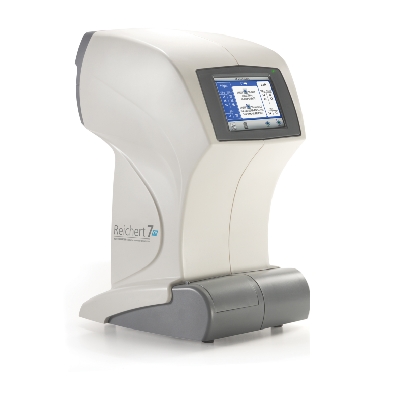 First of all, from the bottom of my heart, I have to thank Dave for leading me to my purchase of my tonometer; what a fantastic instrument!
Several years ago, my ophthalmologist said that I probably had what is called "normal pressure" glaucoma; my pressure was usually 15-16 whenever he checked me, and the highest he ever recorded was 19 on my right eye. He told me to find a glaucoma specialist, so I did.
I went to the specialist for a couple of years, but several things discouraged me from continuing to see him. I found another ophthalmologist; she was somewhat younger and, I thought, perhaps less apt to be running a Speede Oil Change type of service, to see how many people she could get through her clinic in a day. She was a bit better at the latter, but she refused to give me a prescription for a tonometer. I left her and quickly acquired a tonometer prescription; and by the way, the requirement for a prescription for a non-contact tonometer is as silly as the need for me to have a real estate broker's license to sell real estate, or for a city to have building inspectors.
 If you register and login, you should have access to all the content on FitEyes.com. We also make some content available to users who are not logged in (and may not have registered).
All the content related to self-tonometry is restricted to users who have registered and who have agreed to our disclaimer. Some other content is restricted too. However, if you see a restricted article that you think should not be restricted, please let us know. (And if you see any unrestricted content that should be restricted, absolutely notify us right away!)
We restrict access to the content on FitEyes.com because there is some powerful information here and we have to be careful that it is not misused or misunderstood. There are regulations concerning medical advice and we want to make sure that all content on FitEyes.com adheres to those regulations.
This site is intended only for people who are under the care of an ophthalmologist and who are not relying on this site as medical advice.
Here are the instructions to access the private FitEyes email discussion archive:
Browse to https://discuss.fiteyes.com/accounts/signup/?next=/mailman3/lists/ to create a new user account. Fill in the fields and click the "Sign Up" button. Look for the confirmation email and click the link it contains.
Once you are signed up and confirmed, you will see this page:
https://discuss.fiteyes.com/mailman3/lists/
Edited by:
Neil T Choplin, MD
Glaucoma Specialist,
Eye Care of San Diego
Captain, Medical Corps,
United States Navy, Retired
Former Chairman and Residency Director
Naval Medical Center
San Diego, CA
USA
A study by Kumar and Hillier published in Eye in 2009 published a clinical study on this very topic. The purpose of the study was to evaluate the current practice regarding calibration error checks in the United Kingdom and assess the views of senior nursing staff in charge of outpatient clinics as to whom they believe to be responsible for calibration error checks in their department.
This week the FitEyes community provided important answers to my emotional question about checking my eye pressure at home. I asked,
You should be pleased with the breadth and depth of discussion with this group. All posts will come to your email in-box so you can reply to posts by simply replying to the email. Start a new topic by sending an email to all@discuss.fiteyes.com . All of our discussion posts are moderated to filter out inappropriate content, but opinions from all are welcome.
Dave posted Oct 25 2019:
Jacqueline wrote 5-1-2019:
I got my Reichart 7CR six weeks ago and have kept daily charts of frequent IOPs. This is an illuminating process. My observations so far:
New Concepts in Our Understanding of Glaucoma
How dynamic pulsatile mechanisms determine aqueous outflow.
By Murray Johnstone, MD
This is some of the most important research in the last 60 years in the medical specialty of glaucoma.
Log in to download the PDF.
A wide range of neurodegenerative diseases (NDs), including Glaucoma, Alzheimer's disease, Parkinson's disease, Huntington's disease, and prion diseases, share common mechanisms such as neuronal loss, apoptosis, mitochondrial dysfunction, oxidative stress, and inflammation.
Intervention strategies using plant-derived bioactive compounds have been offered as a form of treatment for these debilitating conditions, as there are currently no remedies to prevent, reverse, or halt the progression of neuronal loss. Rutin, a glycoside of the flavonoid quercetin, is found in many plants and fruits, especially buckwheat, apricots, cherries, grapes, grapefruit, plums, and oranges.
Pharmacological studies have reported the beneficial effects of rutin in many disease conditions, and its therapeutic potential in several models of NDs has created considerable excitement.
In the attached scientific paper, published in 2018, the authors summarize the current knowledge on the neuroprotective mechanisms of rutin in various experimental models of neurodegenerative diseases. The mechanisms of action reviewed in this article include reduction of proinflammatory cytokines, improved antioxidant enzyme activities, activation of the mitogen-activated protein kinase cascade, downregulation of mRNA expression of PD-linked and proapoptotic genes, upregulation of the ion transport and antiapoptotic genes, and restoration of the activities of mitochondrial complex enzymes.
Taken together, these findings suggest that rutin may be a promising neuroprotective compound for the treatment of glaucoma and other neurodegenerative diseases. Additionally, there are two studies on intraocular pressure and the combination of rutin plus forskolin (an herbal extract) which show this combination has the potential to reduce intraocular pressure.
Coleus Forskolii Extract 250 mg 60 caps by Paradise Herbs – FitEyes eStore https://estore.fiteyes.com/products/coleus-forskolii-extract-60-caps-by-...
Rutin 450 mg 100 vcaps by NOW Foods – FitEyes eStore https://estore.fiteyes.com/products/rutin-450-mg-100-vcaps-by-now-foods
Log in to download the article.
Log in to download the full text paper.
Gut microbiota-derived metabolite trimethylamine-N-oxide (TMAO) is emerging as a new potentially important cause of increased cardiovascular risk. The purpose of this meta-analysis was to systematically estimate and quantify the association between TMAO plasma levels, mortality, and major adverse cardio and cerebrovascular events (MACCE).
Introduction by Vegsource.com
There has recently been a flurry of discussion prompted by an article by raw-animal-product advocate Denise Minger, which criticizes The China Study and attacks its author, Dr. T. Colin Campbell. Minger questions Dr. Campbell's personal motives and attempts to impugn his character.
Dr. Campbell recently took time to review Minger's observations and respond. You can read Minger's original article below, linked at the start of Dr. Campbell's response.


Login or Create an Account to start interacting with the FitEyes community.