
intraocular pressure

Glaucoma, elevated intraocular pressure, membrane permeability and emotions

Submitted by dave on Sat, 05/21/2011 - 4:07pm

For those of us with glaucoma or ocular hypertension, our goal is for the fluid in the eye (aqeous humor) to be able to flow freely out the two exit pathways from the eye. In this context, we had a recent discussion on the benefits of fish oil and DHA for glaucoma. In this discussion, someone raised this point:

Quote: "fish oil can improve membrane permeability"

That's a useful fact on its own. But that got me thinking about what I have learned from teaching and practicing Serene Impulse (and doing so as both a glaucoma patient and a personal self-tonometry researcher).

Fish oils (including DHA) may have a small effect on IOP -- but much less of an effect than other things I have identifed as a result of mixing self-tonometry and Serene Impulse -- and also as a result of interacting with other tonometer owners in the FitEyes community.

In pursuing knowledge that will help me manage glaucoma, I have a guiding principle: don't waste your time going after the small change. Go for the stuff with the big payoff. Mental and emotional tension, which always lead to tissue contraction, are a key area where we can find that big payoff. For some background, please see this link:

http://fiteyes.com/blog/dave/the-two-most-important-facts-you-should-know-about-glaucoma

And here's another related post by Bailey:

http://fiteyes.com/blog/bstruss/mental-emotional-and-lifestyle-factors-are-the-powerful-iop-influencers

And I will expand on all of this in the present article and tie it together into an (informal) theory of elevated intraocular pressure.

Mental, emotional and lifestyle factors are the powerful IOP influencers

Submitted by bstruss on Fri, 08/13/2010 - 10:15pm

I am learning so much more about these patterns and their effect on my IOP all the time. Recently, I had a major emotional crises with my family concerning a simple misunderstanding and lack of communication. Interestingly, my eye pressures did not rise in the first couple of days (though the stress was off the charts). However, after a couple of days, my eye pressures went crazy, and even with lumigan, I could hardly get them below 20s.
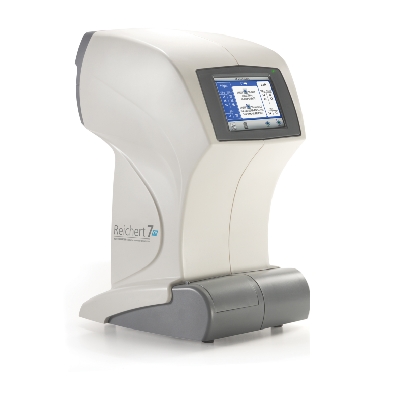
Why guess about your eye pressure when you can know?

Submitted by belann on Fri, 08/13/2010 - 3:05pm

I have had my tonometer for almost 6 months.  It has answered a multitude of questions about how my daily routine affects my health.  I didn't know, for example, that just taking a walk outside for a half hour or so would reduce my eye pressure, sometimes by as much as 50%.  I also didn't know that I wasn't one of the people whose pressures are higher at night--in fact my lowest pressures are at night.  (That was good news.  I was tired of sleeping with my head elevated).  

I have found no supplements that had any effect on lowering my IOP, but I have found that some supplements will raise my IOP quite significantly.  I know that out of control thoughts and periods of stress significantly raise my IOP in spite of the two drops I am using or any other healthy lifestyle choices I am making. 

Read more...


I love my new tonometer

Submitted by Maurice Dubois on Mon, 04/26/2010 - 11:38pm

First of all, from the bottom of my heart, I have to thank Dave for leading me to my purchase of my tonometer; what a fantastic instrument!

Several years ago, my ophthalmologist said that I probably had what is called "normal pressure" glaucoma; my pressure was usually 15-16 whenever he checked me, and the highest he ever recorded was 19 on my right eye. He told me to find a glaucoma specialist, so I did.

I went to the specialist for a couple of years, but several things discouraged me from continuing to see him. I found another ophthalmologist; she was somewhat younger and, I thought, perhaps less apt to be running a Speede Oil Change type of service, to see how many people she could get through her clinic in a day. She was a bit better at the latter, but she refused to give me a prescription for a tonometer. I left her and quickly acquired a tonometer prescription; and by the way, the requirement for a prescription for a non-contact tonometer is as silly as the need for me to have a real estate broker's license to sell real estate, or for a city to have building inspectors.

Home Eye Pressure Monitoring Recommended

Submitted by FitEyesAdmin on Sat, 09/12/2009 - 3:38pm

Millions of people around the world should be monitoring their eye pressure (intraocular pressure) at home, according to health organizations (such as  International Society for Self-Tonometry (ISST)) that are issuing recommendations on what to do and how to do it. Many experts, such as Dr.

The effect of measurement order between right and left eyes

Submitted by Bailey on Sun, 04/03/2011 - 7:14am

Effect of Measurement Order Between Right and Left Eyes on Intraocular Pressure Measurement

http://archopht.ama-assn.org/cgi/content/short/129/3/276

Melike Pekmezci, MD; Sidney T. Chang, MD; Bradley S. Wilson, MA; Mae O. Gordon, PhD; Anjali M. Bhorade, MD, MSCI

Arch Ophthalmol. 2011;129(3):276-281. doi:10.1001/archophthalmol.2011.33

Prudence, Horror and Intraocular Pressure

Submitted by dave on Wed, 03/30/2011 - 5:21pm

Recently we had a discussion on the FitEyes email list about experimenting with glaucoma medications. As part of that discussion, people expressed that they were horrified or fearful. At least one person responded by advocating a prudent stance. I certainly do not disagree with the advice given. In fact, I think everyone who responded to the original post was in agreement that the thing the original questioner contemplated was totally inappropriate for the person's skill level. So that was the end of that discussion, rightly so.

Filed Under (tags):

If the IOP readings are ever high it proves that they do go that high

Submitted by dave on Fri, 01/28/2011 - 1:57pm

From a reader:

The doctor looked at my self-tonometry eye pressure data I brought with me. But he did not give my data much credence. He said if the  intraocular pressure readings are ever high then that shows that they do go that high. He is quite intimidating.

The assumption by the doctor is that he must target his treatment at the maximum intraocular pressure peak no matter how short it lasted, or how infrequent it is or what caused the IOP to rise.

Ophthalmologists are not yet familiar with the concept of the ocular white coat syndrome (white coat ocular hypertension). Our self-tonometry data may show that our IOP is lower outside the doctor's office than inside the office. Many of us believe this is an important consideration and a few doctors are starting to pay close attention to this information.

But reading your doctor's intimidating response gave me an idea...

Pages

Subscribe to FitEyes.com RSS Feed Subscribe to intraocular pressure