I read this comment recently on FitEyes.com:
"When I was in the ophthalmologist's office my eye pressure was 30 mmHg, and when I was in my optometrist's office (who also happens to be a good friend and strongly believes in alternative, natural eye care), my eye pressure was 20 mmHg. The intraocular pressure readings were taken one day apart, at the same time in the morning."
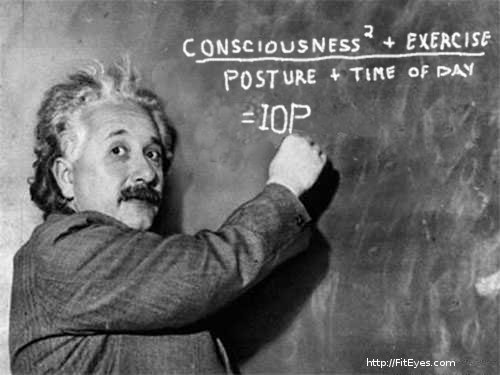
I know several people in our self-tonometry research group who have had experiences very, very similar to this. I have seen it myself. Typically, this is due to stress. It is typically not, as skeptics like to immediately assume, due to errors in measurement or equipment.
Often, both patient and physician are very pleased if a combination of drugs and/or surgery reduce intraocular pressure by 10 mmHg. A change of this magnitude is highly significant.
My own experience, and the experience of many other people doing self-tonometry, is that our inner state (our thoughts and emotions) are capable of producing intraocular pressure changes in excess of 10 mmHg. In some ways this is a shocking finding because, A) in general, the field of ophthalmology does not recognize or admit that this is even possible -- that stress affects IOP, and B) the magnitude of the change is often similar to the changes produced by the most powerful treatments (drugs and surgery) available in allopathic medicine.